Pages

Wednesday, February 16, 2011

Interfaces


With the release of protools 9, amateurs think that investing in an interface is pointless.  These unknowledgeable beginners are under the impression that because this new version of protools does not require an interface to run, like the previous versions of protools, that they do not have to purchase one at all.  These industry new comers are seriously mistaken if they think that just the software is enough to get them through to their careers.

Because this new protools system works so well with out the interface, the consensus with the new comers to the industry is that the required purchase of the interface with the software was nothing more than a ploy to sell the hardware. When in reality the hardware is the only way to record into the program and without the hardware there is really no use for the software. Yes it is true that the hardware can be pricy, but it is 100% necessary for more than 75% of the programs functions.

While there are countless interfaces out on the market, which ones are worth the investment?
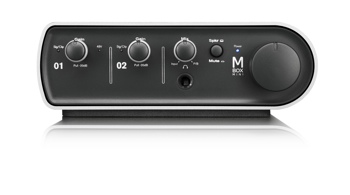

Mbox Mini

This interface is a 2-channel USB Audio Interface with 1 Mic Preamp and 1/4" Line/DI. Although this is one of the cheapest at around $330 it is very limited as to how many inputs can go into protools.
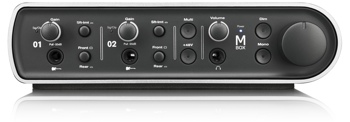

Mbox
This interface is a 4-channel USB Audio/MIDI Interface with 2 Mic Preamps, DI, S/PDIF, Softclip Limiters, and Onboard. This interface give just a little more inputs than the mini but is still in the lower levels of professional interfaces. This hardware goes for around $550.
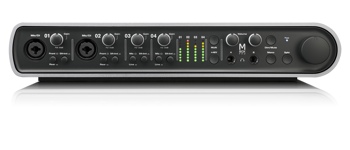

Mbox Pro

This interface is higher up in the hardware food chain providing 8-channel FireWire Audio/MIDI Interface with 4 Mic Preamps, DI, S/PDIF, Softclip Limiters, and Onboard DSP. At $750 this interface is a little less affordable for those only willing to pay the minimum in gear.


Digidesign 003 Rack and 003 Factory
These two interfaces are pretty much the same thing only in different packages. Both interfaces are at the top of the line for protools LE users. Both offer complete functionality with the protools software.
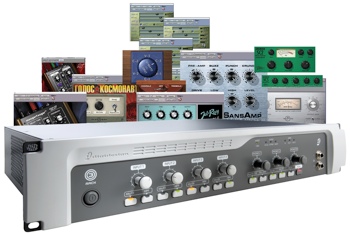
           
003 Rack
           
                8 redesigned discrete analog inputs (4 mic/line/instrument (DI) preamps; phantom power selectable in two channel increments)
                Alternate Source Input for monitoring -10 dBV audio equipment (tape players, CD players, etc.) directly to the monitor outputs
                8 discrete analog outputs, all balanced +4 levels, plus a separate balanced monitor output
                Improved 24-bit/96 kHz converters
                Monitor output includes dedicated volume control knob
                2 Headphone outputs include dedicated volume control knobs
                Word Clock
                8 channels of ADAT optical I/O
                2 channels of S/PDIF I/O
MIDI I/O - 1 input port/2 output ports (16 channels in/32 out)
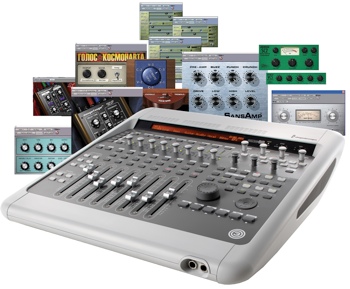
003 Factory
                Eight redesigned discrete analog inputs (four mic/line/instrument (DI) preamps; phantom power selectable in 2-channel increments)
                Alternate Source Input for monitoring -10 dBV audio equipment (tape players, CD players, etc.) directly to the monitor outputs
                Eight discrete analog outputs, all balanced +4 levels, plus a separate balanced monitor output
                Improved 24-bit/96 kHz converters
                Monitor output includes dedicated volume control knob
                Two headphone outputs include dedicated volume control knobs
                Standalone MIDI controller mode
                Word clock
                Jog/shuttle wheel
                Eight channels of ADAT optical I/O
                Two channels of S/PDIF I/O
MIDI I/O - one input port/two output ports (16 channels in/32 out)

Monday, February 7, 2011

Pro Tools 9


Avid (a.k.a  Digidesign), inventor of pro tools has once again out done themselves. In the past year and a half the industry standard and world-renowned DAW software pro tools, was reinvented. The company came out with pro tools 8 in mid 2009 replacing the previous 7.4 version. This upgrade was highly anticipated because of its new features that are listed below.

         Pro tools 8
Beautiful, redesigned interface with new enhancements and customizability
Comprehensive collection of professional sound-processing plug-ins, plus 20 new effects
Score Editor and MIDI Editor windows offer comprehensive composing tools
Create a flawless performance using new track compositing features
Check for Updates feature keeps Pro Tools and plug-ins up to date
QuickTime HD support on Mac OS X-based systems
Lock regions to the timeline to prevent them from being moved or edited
Five new groundbreaking virtual instruments for music creation
Expands Pro Tools LE and M-Powered systems to support up to 48 mono or stereo audio tracks
Transpose audio regions in real time with Elastic Pitch
Automation and Controller lanes provide easy editing access
Windows Vista (32-bit Business or Ultimate) support on Pro Tools HD
Use more plug-ins without bussing, with access to 10 inserts per channel
Supports files up to 4 GB, allowing for sessions with longer files and higher sample rates

Of course, with any new software there are bound to be some problems. Well avid, the company behind pro tools does an incredible job of listening to their customers and taking their suggestions to heart. With numerous problems arising, avid started working on all the suggestions given to them and thus was born pro tools 9.

Not only did pro tools 9 (released late 2010) comply with everything that the consumers desired, but it exceeded everyone’s expectations. Pro tools 9 opened up a whole new world of possibilities but eliminating one giant factor. All previous versions of pro tools required a piece of hardware to run the software. This one feature allows the user to open up pro tools where and when ever possible.

This advancement in the software is not the only thing that was added. As a matter of fact the entire program was re-invented and now features all the elements listed bellow.

         Pro tools 9 
Single, Unified Version of Pro Tools
• Pro Tools 9.0 provides a single, unified installer for Pro Tools and Pro Tools HD
• New Pro Tools 9.0 PACE copy protection with iLok USB key
Pro Tools Audio Engine
• Support for Core Audio hardware (including Mac built-in audio with supported Core Audio drivers installed
• Support for ASIO hardware with supported ASIO drivers installed
• New Pro Tools Playback Engine settings
• Current Engine setting for selecting which Audio engine to use
• Pro Tools Aggregate I/O option for using the built in audio on Mac
• Delay Compensation settings for all versions of Pro Tools
• New Pro Tools Hardware settings
• Ability to select Core Audio and ASIO interfaces
• Launch Setup Application command for Core Audio and ASIO audio interfaces
Mixing and Recording
• Increased number of audio and MIDI tracks
• Increased number of internal mix busses
• New Track and Send Output selector commands for faster, simplified signal routing and mixer configuration
• Multiple Stereo Pan Depth options
• 7.1 and 7.0 standard HD surround formats (Pro Tools HD and Pro Tools with Complete Production Toolkit 2 only)
• Support for EUCONTM for controlling Pro Tools with EUCON-aware control surfaces
Import and Export Options for All Pro Tools Systems
• Advanced Import Session Data (formerly Pro Tools HD only, or Pro Tools LE with DV Toolkit 2 or Complete Production Toolkit only)
• Import AAF and OMF sequences (formerly with the Digi Translator 2.0 option only)
• New AAF import features and enhancements:
• New Locators To Import setting for importing locators from Media Composer–generated AAF sequences
• Export AAF and OMF sequences (formerly with the Digi Translator 2.0 option only)
• Avid Interplay Support with Mac
• Ability to check data into and out of Avid Interplay directly with the Interplay Access browser
• Export MP3 (formerly with the MP3 Export option only)
• Export Session as Text (formerly Pro Tools HD only)
What’s New for Pro Tools LE Users
I/O Setup Improvements
• Session and System settings
• Output and internal mix busses
• Ability to Import I/O Settings by page
• Overlapping Paths
• Improved session interchange
Advanced Digi Base Features
• Advanced search features
• Digi Base Catalogs
Editing Features
• Auto-Scrolling tracks in the Mix and Edit windows
• Advanced Beat Detective features
• Separate multiple tracks
• Collection mode
Delay Compensation
• Delay Compensation option, engine, view
• Low Latency Monitoring During Recording
• Delay Compensation on Auxiliary Input tracks, MIDI

As you can see from all the added features, pro tools 9 really stepped up its game. Combining the old pro tools software with the more advance and professional pro tools HD allowed avid to give the customers what they wanted and even what they didn’t know they wanted.

Pro tools 9 has again raised the bar on what is considered the industry standard and I can not see any of the competitors stealing that title.

Monday, January 24, 2011

Top headphones on the market today

In the Recording arts industry, top of the line gear and technology is a must. With so many big name studios and personal home recording studios, the technology the studios carry is what brings in the business. It also needs to cater to today’s generation.

            It used to be that the recording industry needed to make sure the deliverable content (music) was perfect for the popular medium (Record players, tape machines, CD players, ext.). Now, everyone is on the go with MP3 players and iPods. This means that the music has to be perfect for these digital mediums. This in its self is asking a lot because digital media presents glitches in music that was never a problem with analog media.

            Now we must ask our selves how we perfect this media that it no longer being listened to through loud speakers but through tiny ear buds. The answer is to put the mixing engineer in the consumer’s shoes. This means mixing the music in headphones. But not just any headphones, the engineer needs headphones that will show the tiniest bit of imperfection so that no matter how high or low quality headphones or ear buds the consumers have they all get the best quality sound that they can get.

            That brings us to today’s products. I will be reviewing three different, top of the line, professional headphones. First we have Audio Technica ATH-D40fs Enhanced-bass Precision Studiophones. These headphones are at the bottom of my three picks, although they do have their pros. The ATH-D40fs have an enhanced bass frequency response that allows for better hearing of the low frequencies such as the kick drum and the bass guitar. This can be helpful in many ways to the engineer but could also lead them to place those lower level frequencies to low to be heard with other headphones, seeing as only these have this bass enhancement. It would also be better if the headphones could have a larger range in frequency then the 20-28,000Hz that they have.

            Next we will be looking at the AKG K701 Headphones. These headphones are a little older but are still at the top on the market. The headphones are unique all around. They are the first to ever use flat wire technology. This technology helps out with the spacing of the instruments within the headphones giving the listener a true dynamic sound. This dynamic sound will give the listener the feeling that every orchestra member is exactly where they should be in a concert hall, making the listening experience feel real. I think what also helps them achieve this is there frequency response of 10- 39,800Hz, which is absolutely amazing and almost unheard of in headphones. You really could not get much better then these until Sennheiser decided to fight back with the HD 800s.

            The Sennheiser HD 800s are considered to be the Maserati of the headphone industry. These headphones are made out of top of the line parts with its Y cable made out of Kevlar-reinforced OFC copper wire for ultra durability. These headphones have everything that the AKGs have but times 10 with a frequency range of 6-51,000Hz, which I do not think exists in any other headphone. There simply remarkable design would have anyone thinking, why would I choose anything else? But this is where the price just might decide for you.

            The Audio Technica headphones are in the $150 range where as the AKGs are in the $450. These are a little more expensive but considering the amazing piece of technology that they are I would pay the difference, and the Sennheisers are a whopping $1700. Although these headphones are amazing, I do not have that much money to spend on a pair of headphones.

            So there you have it. I have that I have been helpful for those on the look out for a good pair of headphones.